
(via Sean Albiez)
Stylo alerted me to this a while ago, describing it as the worst television program he'd ever seen, or words to that effect. It's a 1989 episode of Channel 4's experimental arts show Club X that involved the recreation of a Futurist banquet, with "annotations" in the form of clips explaining the Italian Futurists and Marinetti's epater le bourgeois / pasta-is-passé approach to avant-garde cuisine.

The peg for the program was the republication of 1932's The Futurist Cookbook. Editor Leslie Chamberlain appears at the Channel X banquet and here, 25 years later, she recalls the program and the publication of the book. (She's also the one who YouTubed the program from a faded VHS, which also captures some vintage late '80s UK commercials and a chunk of the programming that followed).


Chamberlain writes:
"... Marinetti took a fresh and funny look at food. Cooked dishes were calories, but also shape, texture and sign. Recipes on the plate were exciting, colourful and suggestive, a bit like paintings and a bit like poems. We’d call them mini-installations today. I was always fond of the little diversion Marinetti thought up instead of a sideplate: strips of velvet and sandpaper would be provided to exercise the tactile sense, while nose, palate and eye went to work on the main course. Main course? That would be food plated by a cook with a cubistic eye. Diners might expect perfume to be sprayed in the air and sounds to be relayed by a Futurist music box, to complete the multiple sense-nourishing experience....
"What made Marinetti turn to food? Sheer creativity and a desire to have fun. Turn to any of the recipes in La Cucina Futurista and watch what happens as you carve out the cylinders of meat and amass the ballbearings. This is architectonic food you’re shaping. For a colour opera in the kitchen you’ll also need food dye and interesting lighting....
".... Futurism was trying to introduce an industrial edge into the kitchen, although never with an eye to mass-production. Making Futurist Food involves a conveyor belt for one, and you work with it as if you were an artist in the studio. Just one proviso: the stress on architectonics is exactly why there’s no such thing as Futurist soup. Any guest asking for soup can go back to the nineteenth century!
"The Futurist Cookbook is only partly a collection of recipes and arguably its avant-garde inventiveness really comes to the fore in Marinetti’s food charades. The charades, or tableaux vivants, are like screenplays for chic tv ads today. They were staged who knows where. Probably in restaurants or private homes, or somewhere out in the country, or at least in the garden. Futurist actors dressed up and danced, smoozed, lunched and lounged in stylized poses."
Chamberlain does mention the Mussolini-fanboy problem, but moves swiftly on:
"Even now La Cucina Futurista is a book that evokes much more interest in the anglophone world [than in Italy] because we don’t have the awkward associations to deal with. We need to understand them though, and I’ve explained that in my introduction to the classic English-language version.... It was difficult to find a publisher for an English Cucina futurista. Penguin was less bold in those days, and one or two small publishers also said no. Copyright problems deterred them. Step up Conway Lloyd-Morgan at Trefoil, who bravely took the project on, commissioning a translation from Sue Brill and a wonderful design from Liz Mcquiston. My role was to edit the translation and write an introduction..... "
"Since that gorgeous pink and green and black and yellow volume came out in 1989 The Futurist Cookbook has become a frequent point of reference in all manner of art and history books. The edition was a great success. So now, finally, Penguin have reprinted that edition, in a sober black-and-white livery, and with a photograph on the cover from the 1930s that stresses the historical reality of the Futurist banquets blueprinted inside. Actually our 2014 edition is closer to Marinetti’s original, which looks as if it were issued in wartime, when there was a shortage of paper and not much scope for design flair.
"In 1989 we took much of our inspiration from Marinetti’s earlier books, like Mafarkar the Futurist, which were typographic fantasies closer to the Russian Futurists, and pointed the way forward to the Concrete Poetry of the 1960s."


^^^^^^^^^^^^^^^^^^
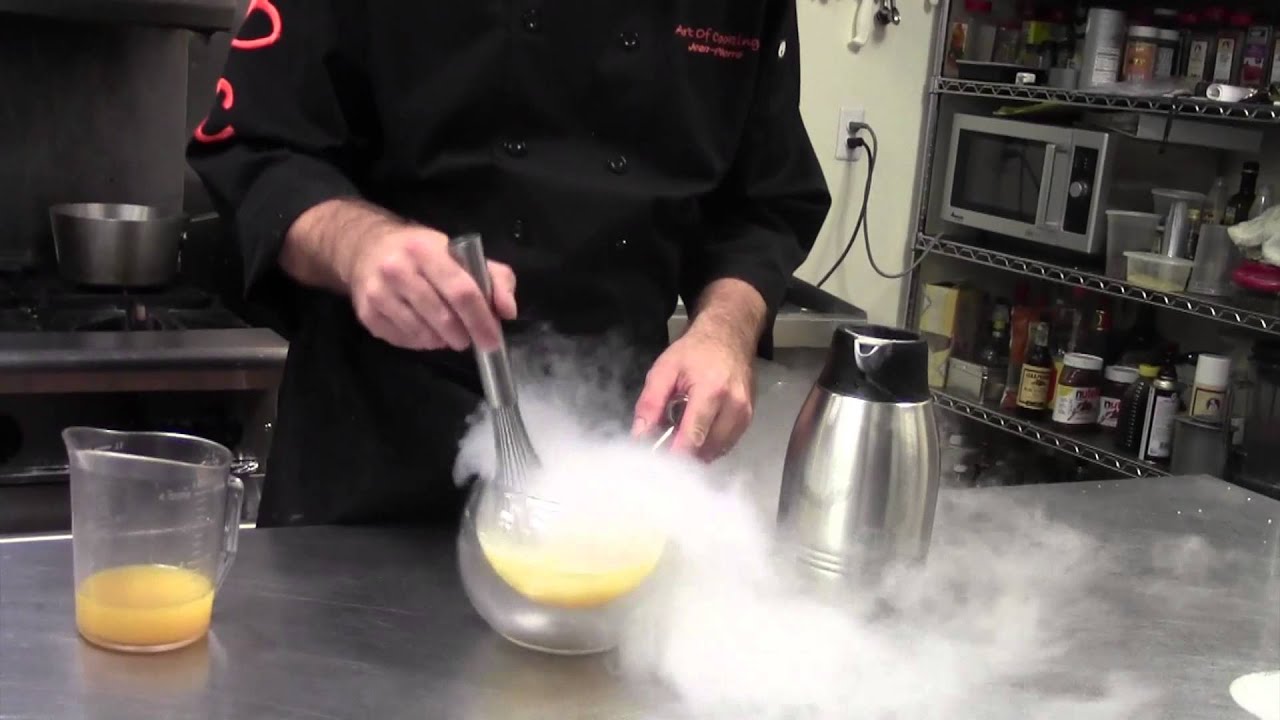
Molecular gastronomy - with its weird foams and smokes, its deployment of industrial-style techniques involving blow torches and liquid nitrogen - seems like a modern day actualization of the Futurist culinary approach, but with a view to be tasty as well as startling and eye-catching.


^^^^^^^^^^^^^^^^^^^
Incidentally, Victor Lewis-Smith 's first work on television took place on Club X - he contributed the standalone Buygones mini-programmes (later to become a newspaper column), the focus being obsolete gadgets and quaint appliances, once-popular toys, fads, and foodstuffs, dead media and forgotten TV personalities, etc etc... Things like the Spirograph, candy cigarettes, the Stylophone, Frank Bough ...
Buygones was an early example of retro-futurism, perhaps even that conjunction of comedy and hauntology.
Stylo points to this other chunk of Lewis-Smith spoofage from Club X
An album that was never officially released but given away to friends.
"The cover of the album contains 779 names—one for each copy of the album. At the bottom of the cover is a blank space for anyone not named on the cover to write their name. Each person who received the album got a copy with their name circled on the cover; this was done for identification of a "culprit" should the album ever end up for sale.The Futurist was never released commercially. There is speculation that this was because Shellac were not satisfied with the finished product."
Not much of a gift then!
Oddly, I once invoked the Italian Futurists in the context of Big Black:
"Big Black's anti-Romanticism was signaled very clearly in the sleeve note salutation on Songs About Fucking to "all bands who don't write love songs", which recalled the Futurists' proclamation that the nude in painting was an exhausted idiom, sentimentalized and enfeebled."
Would you believe, I have never listened to Shellac - until today.
After Rapeman, I didn't bother with Albini's musical efforts.
Listening to At Action Park, I didn't feel like I'd missed a whole heap.
The Brillo Pad guitar sounds like someone fixated fairly fruitlessly on trying to replicate - without exactly repeating - the impact that Andy Gill / Bruce Gilbert / et al - had on him at an impressionable age. So not really Futurist - Past-ist, if anything.
I've had more time for Albini as thinker and opinionator - I don't think there's been an interview, or a piece of writing, that he's done in ensuing decades that didn't have something in it that made me think, even if the thinking was to work out why his opinion was bullshit. He did work hard to achieve and maintain consistency in his ideas about aesthetic integrity and the right(eous) way to go about being a band. Anybody who attempts to formulate a system of ideas and values - even at the risk of rigidity and self-dogma - is worth paying attention to.
I found myself nodding at these acerbic remarks about Zorn - from an Invisible Jukebox in the Wire, probably '94, or '95 - even as they nestled amidst absolutely ridiculous opinions about Black Sabbath and The Beatles.

via this Dissensus thread on Roman techno
itself triggered from this article at Urbanomic about a "dark continuum" of Italian hardtechno
itself drawing on this Matt Anniss feature for RBMA from a decade earlier
Sounds Never Seen - love this label name.
Lory D very much a parallel operator to The Mover + PCP.
And indeed later, towards the end of the '90s, rematerialises up on Acardipane's Adrenachome label
Back to the start of the '90s, to 1991:
Interesting, the shift - within a single year - from "We Are In the Future" to "We Were In the Future"


Does this show how fleeting these moments are - how quickly the future-rush can give way to technostalgia, a sense that it's already slipped away?
some earlier thoughts on the Futurists
1/ Futurism contra the Museal (from Retromania)
Punk seems hostile to museum-ification on account of its iconoclastic contempt for the past. With rave, it's the movement's orientation towards the future that should really repel the dustiness of the archive's embrace. The punishing minimalism of early techno especially--music stripped to rhythm and texture, a true art of noises--recalls the spirit of the Italian Futurists circa 1909-15. As much as I love history and poring over the past, there's a part of me that will always thrill to, and agree with, the Futurist manifestoes, which showered scalding scorn over "the passéists": antiquarians, curators, tradition-loving art critics. Italian Futurism was a response to the spiritual oppression of growing up in a country that pioneered tourism as time travel (for it is nearly always the past of a country you visit on vacation, at least in the Old World), a land covered with magisterial ruins, venerable cathedrals, grand squares and palaces, the monumental residues not just of one golden age (the Roman Empire) but of two (the Renaissance).
Futurist leader F.T. Marinetti's founding manifesto proclaimed "we want to free this land from its smelly gangrene of professors, archaeologists, ciceroni and antiquarians. For too long has Italy been a dealer in second-hand clothes. We mean to free her from the numberless museums that cover her like so many graveyards…. Museums: cemeteries!... Identical, surely, in the sinister promiscuity of so many bodies unknown to one another." Continuing the sexual imagery, he ranted about how "admiring an old picture is the same as pouring our sensibility into a funerary urn instead of hurtling it far off, in violent spasms of action and creation." To venerate artworks from the past was like wasting one's élan vital on something inert and decayed; like fucking a corpse.
Marinetti imagined setting fire "to the library shelves" and redirecting "the canals to flood the museums" so that "the glorious old canvases" bobbed "adrift on those waters". What would he, writing in 1909, have made of the state of Western culture a hundred years later? The last decades of the 20th Century saw what Andreas Huyssen has called a "memory boom", with a surge in the foundation of museums and archives being just one facet of a culture-wide obsession with commemoration, documentation, and preservation

An example of what I call "the rhetorics of temporality" - the way critics compulsively position and reposition things they like, ...


